

The case I am going to describe in this blog post was only seemingly a typical one: a large company, engaged in activities including the production and sale of agri-food products, was managed by a person hired for this purpose – a specialist in the industry, a manager of many years’ standing. This person, who had actually managed the company for many years, turned out to be, to put it mildly, unreliable.
At first glance, such an action could be classified as one of the offences against property, such as the commonly known fraud, or as an economic offence of the so-called criminal abuse of trust or simply acting to the detriment of the company (the latter defined in Article 296 of the Penal Code). These types of offences have been present in the Polish Criminal Code for a long time and are frequently charged in the prosecutors’ indictments: from the famous Amber Gold or GetBack scandals, through various proceedings concerning e.g. listed companies and irregularities reported by shareholders in their notifications of offences, to corporate disputes, which also have a criminal law dimension
One could say that this is a story like many: a board member, employed by the co-owners of a company, turned out to be dishonest, stole from the company, acted to the detriment of the company, took out assets and so on. Where, then, is anything unusual in this story?
In the case at hand, hardly any of the above legal qualifications could have applied, and the filing of a notice by the victim on the subject of, for example, criminal damage to the company or fraud could have proved counterproductive. In other words, a simple mistake at the stage of triggering criminal proceedings, i.e. drafting a notice of possible criminal offence, could have resulted in the acquittal of the perpetrator in the future.
So what happened at all
As I mentioned, a manager who had been running the client’s company for many years was hired to manage the company. The client had, to say the least, placed a great deal of trust in him. However, there came a point when the owner said “I’m checking” and conducted an audit of his own company, which revealed a number of irregularities and resulted in the decision to terminate the cooperation with immediate effect. There were a number of reasons for this.
Firstly, it turned out that the manager in question was using equipment used in the plant’s existing operations…in his own competitive business. Secondly, part of the company’s production was being hidden from the owners and the proceeds were being hidden ‘in his own pocket’. In essence, the long-standing manager began to treat the company as if it were his own, providing inaccurate information as to its actual activities (and productivity) to the owners. In a word: he enfranchised the company. Unsurprisingly, his reaction to being ‘sacked’ was only the beginning of a small war – and not necessarily figuratively.
On the face of it, the manager has undoubtedly abused the trust placed in him by the owners, yet the colloquially termed offence of ‘criminal abuse of trust’ is present in the Criminal Code. So what is the problem?
If I don’t have one, nobody will have one – presumably this was the leitmotif adopted by the usurper in question. And it has to be said that the beginning of the dispute definitely belonged to him: not only did he move out some of the equipment necessary for production, but he also successfully intimidated key employees of the company, threatening bodily harm, even deprivation of life, using a number of “collaborators” following the owners and employees of the company day and night. He also went so far as to organise break-ins into the company and further thefts of property used to run the business. You have to hand it to him: he effectively torpedoed the plant’s operations, created an atmosphere of fear, leading to the termination of employment contracts and, ultimately, a halt to the company’s operations. The perpetrator wanted to show that without him this company would not exist. For the sake of clarity, I must add that in parallel to these legally dubious actions, the perpetrator attacked the owners with calls for payment, also launching a civil course of action. The case was certainly made more difficult by the fact that the activities of the victims were not simply carried out in the form of a single company, to the detriment of which the perpetrator was alleged to have acted, but took various legal forms.
Moreover, the existing manager was also not spared the private lives of the owners themselves and their families, who also became victims of harassment or threats, which gave rise to their obvious fears for their own safety. One could say that the modus operandi of the criminal groups of the 1990s is back in full force
Co na to organy ścigania?
The aggrieved owners of the company rushed to report the case to the prosecutor’s office, which charged the perpetrator with…violation of “home turf”. I must take the liberty of a word of clarification: all of the above actions of intimidation, organising burglaries, removing property, harassing employees were treated by the prosecution as “entering someone else’s premises” or not leaving them against their will. This needs to be made clear: a violation of home turf does not involve any robbery goal on the part of the perpetrator, nor does it involve defeating security measures (burglary), not to mention actual stalking. Merely acting against the owner’s will is sufficient. Judicial practice shows that, for example, people who refuse to leave a fenced plot of land or journalists who refuse to leave their premises – against the owners’ demands – are convicted of such an offence.
Recognising this and not the other optics of law enforcement, it is not surprising that the victims decided to consult a lawyer. Especially as the perpetrator maintained that “no one will do anything to him” and he will remain unpunished. It is also hard to resist the impression that the charge of trespassing only encouraged him to continue his criminal activities.
A search of the case file revealed yet another surprising fact: some of the company’s machines which had been removed by the perpetrator were temporarily seized by the prosecutor’s office and… the prosecutor’s decision was given to the perpetrator himself for safekeeping. So maybe the perpetrator stole something from someone, but thanks to such actions of the law enforcement authorities, he has just obtained a legal title to continue holding this equipment – at least for the duration of the proceedings.
A closer look at the evidence of the ongoing proceedings led to the obvious, as it might seem, conclusion that the infringement of home turf, if it occurred at all, was only a peripheral part of the criminal actions. Quite frankly, this turn of events could only be welcomed by this manager and his defence counsel.
How to qualify the offender's activity from a criminal law point of view
However, another question arose: how to qualify the perpetrator’s activity from a criminal law point of view? In other words: what offences could the perpetrator actually be charged with in order, on the one hand, to properly reflect what happened, but on the other hand, not to exaggerate the legal qualification, which could lead to at least a partial acquittal?
To put the problem colloquially, one could say that the perpetrator “stole the company” or “misappropriated the company”. The problem, however, is that such an offence does not exist either in the catalogue of offences of the Criminal Code or any other law, and the wronged parties – as I have already mentioned – did not operate only within one company (to the detriment of which, for example, a formally appointed member of the management board could act). And yet the perpetrator’s activities were of this nature in the first place: the former manager wanted first and foremost to keep the production plant for himself at all costs, and only his successful divestment from the company triggered further criminal actions.
The solution to this problem lay in a thorough investigation of the state of the case in the sense that – in addition to the legal issues – it was actually necessary to carry out an internal investigation within the company, as it were, in parallel to the prosecutor’s investigation into the violation of domestic mirrors 🙂
It was only our internal findings together with the client, including those related to the evidence that had yet to be conducted, that allowed us to establish that a whole litany of different criminal acts could actually be proven in the case: from those targeting life and health, through those involving company assets, to crimes against economic turnover. A further step was to make the law enforcement authorities also take an interest in the perpetrator’s extensive criminal activities, carry out the requested evidence and, ultimately, share the conclusions of the victims with regard to the crimes actually committed.
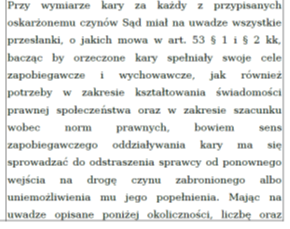
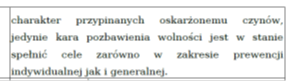
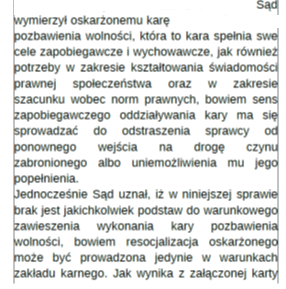
This is what ultimately happened, and the perpetrators were charged with a number of new criminal acts. This time it had a chilling effect and caused the perpetrators to desist from further criminal activity. It seems that this time the suspects, seeing the extent of the charges and the activity of the victims, quickly understood the seriousness of the situation. Of course, the pre-trial proceedings ended with two indictments against several people and the criminal cases had their final outcome in court, which, convicting the perpetrators, applied a number of penalties and other measures aimed at compensating the harm caused to the victims. At the same time, in both convictions, the Courts also pointed to the deterrent function of punishment
In conclusion, it must also be clearly emphasised that the case would not have ended happily if it had not been for the persistence and consistency of the victims themselves, who, noticing the state of the proceedings, despite their justified fears for their own safety, did not wait with folded arms, but decided to seek help elsewhere – ultimately leading to the pacification of the criminal activities.
About authors

 Ask the author a question
BARTŁOMIEJ PIETRUSZKA
Partner, Attorney-at-Law, Head of White Collar Crime Department
