
Is Crypto Theft Really a Theft? What Criminal Law Says?
14 July 2026 • Autor: Kancelaria Brysiewicz Bokina i Wspólnicy
Someone had their cryptocurrency stolen. To the victim, it feels like obvious theft. Under criminal law? Not necessarily.
In a single investigation involving a cryptocurrency exchange, more than 700 victims came forward, with potential damages reaching PLN 350 million. Yet Polish criminal law still struggles with how to properly classify these acts.
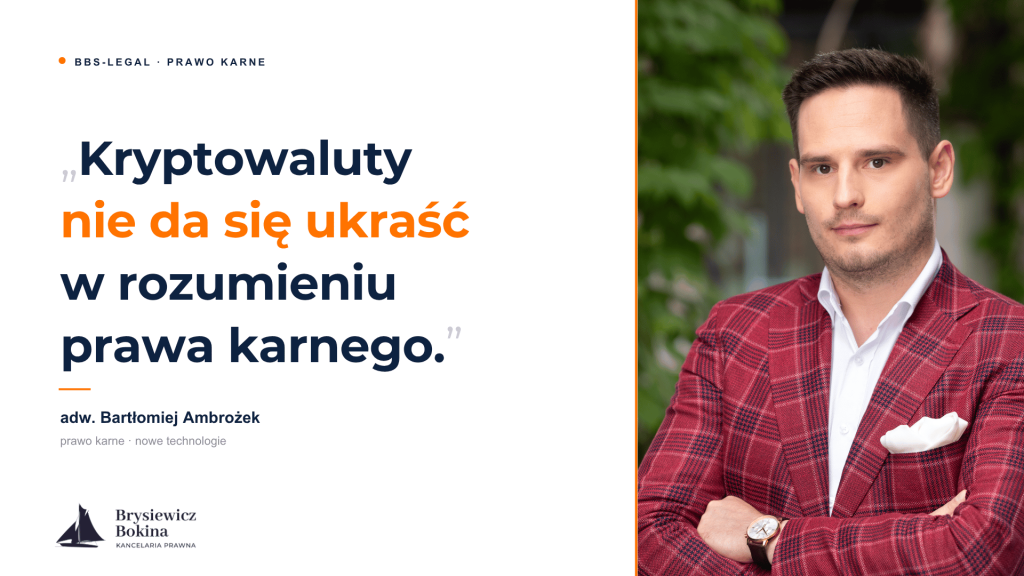
Attorney Bartłomiej Ambrożek explains why virtual currencies slip through the classic provisions on crimes against property:
🟠 Theft, robbery, misappropriation, and handling stolen goods all require an act against a “thing.” Under the Polish Civil Code, only a tangible, physical object qualifies as a “thing.”
🟠 Bitcoin is a string of bits on a digital storage medium, not a “thing.” In a strictly legal sense, it can’t be stolen or destroyed.
🟠 The correct classification for such acts is usually computer fraud (Art. 287 of the Polish Criminal Code), not theft.
Why does this matter for business, not just in theory? Because the correct legal classification of the act determines the outcome of the entire proceedings, both for the victim’s side and for the defense. An incorrectly framed charge can open the door to avoiding liability, even though the incident actually happened.
Attorney Bartłomiej Ambrożek covers the full analysis, along with the relevant provisions and an explanation of the legal status of cryptocurrencies, in a new post on the “Criminal Law in Business” blog.
Have you lost cryptocurrency, or are you defending yourself in a related case?
The correct legal classification determines the outcome of the entire case, both for the victim’s side and for the defense. Let’s take a look at how this applies to your situation.
This article is for informational purposes only and does not constitute legal advice. If you have doubts about your rights or how to proceed, it is advisable to consult a qualified lawyer.
O autorach

 Zadaj pytanie autorowi
Kontakt dla mediów