

What is a business licence?
9 July 2025 • Autor: Kancelaria Brysiewicz Bokina i Wspólnicy
A concession is not only a formality, but also one of the key mechanisms that allow the state to take care of safety, public interest and the protection of natural resources.
It ensures that economic activity in particularly important areas, such as energy, is properly controlled and carried out in compliance with regulations.
Business regulation
Business regulation is the restriction of the entrepreneur’s freedom to establish and carry out certain types of professional activity.
The reasons for restricting the freedom of economic activity are important for the functioning of the state, in particular security and public interest.
The main reason for the introduction of rationing of economic activity is the desire to protect the country’s natural resources, protect the interests of consumers or prevent monopolistic practices.
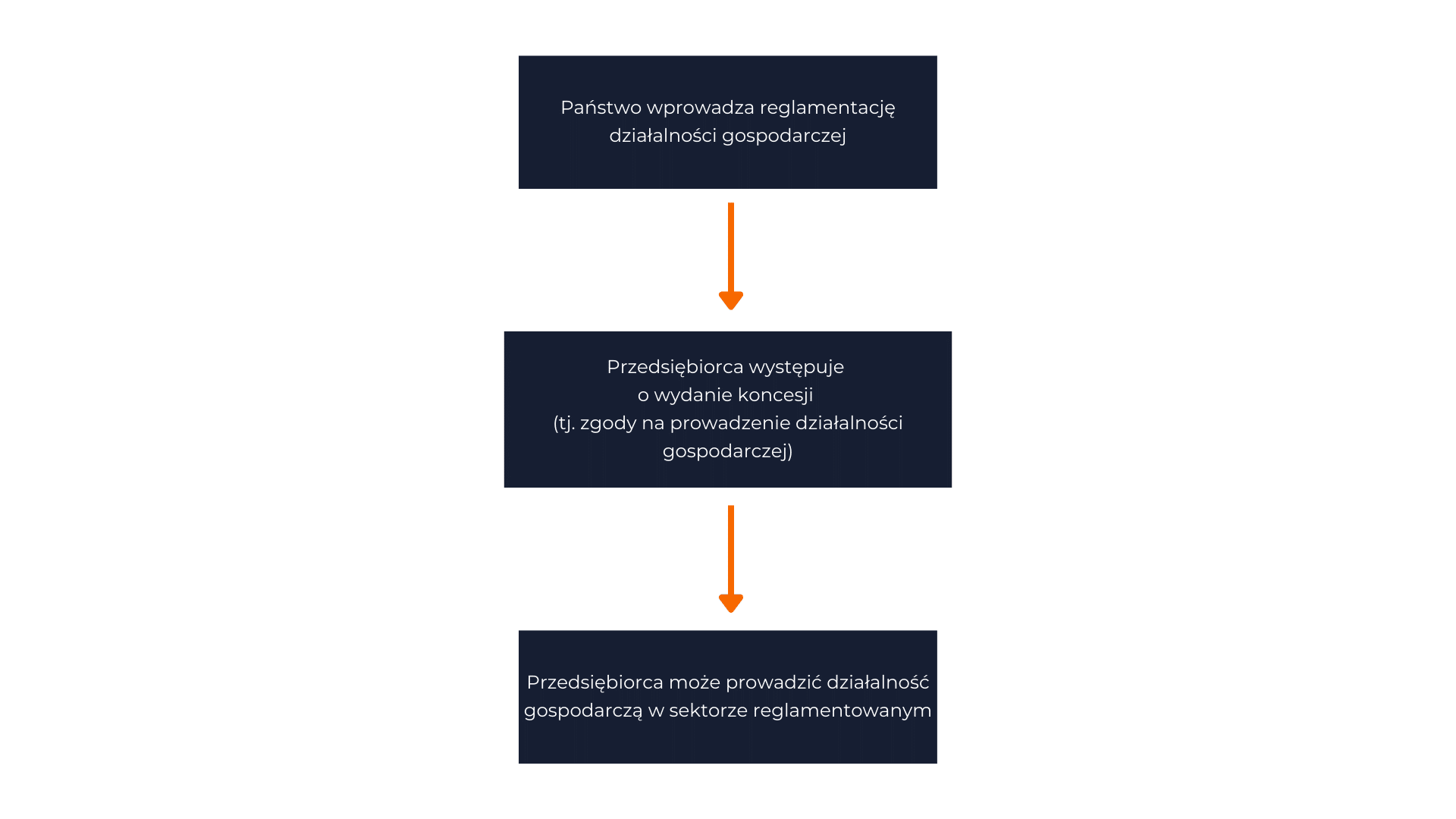
An entrepreneur who plans to carry out a rationed activity must obtain the right to undertake and carry out that activity and must meet specific conditions, as set out in the law, such as a concession to carry out a specific business activity in the field of energy.
Business concession
A concession is an act of consent by a competent authority of the state to undertake and carry out an economic activity reserved by law to the state or of particular importance to the state and citizens.
A concession is therefore one of the manifestations of legal economic rationing, the purpose of which is to restrict the freedom of economic activity for reasons of state security, citizens or other important public interest.
A concession is a public law subjective entitlement granted by a decision of the competent administrative authority to an individually designated entity that meets the statutorily defined requirements for both subjective and objective performance of a specific type of economic activity.
Judgment of the Supreme Court of 8 May 1998, III RN 34/98, OSNP 1999, No 5, item 157.
Features of
a
concession
A concession is one of the manifestations of legal economic rationing, the aim of which is to restrict the freedom of economic activity due to the security of the state, citizens or other important public interest.
A concession is a discretionary decision, so the refusal or granting of a concession is left to the discretion of the issuing authority.
It is a constitutive act – it confers certain rights on the concessionaire and imposes certain obligations on him, effective both towards the concession authority and third parties.
Worth remembering!
________________________________________________
- https://www.biznes.gov.pl/pl/portal/00116
- Kosikowski, Koncesje w prawie polskim…, p. 19, Ustawa o swobodzie działalności gospodarczej.
- Commentary, Warsaw 2009, p. 191.
- Muras, M. Swora [in:] A.
- Dobrowolski, F. Elżanowski, A. Falecki, R. Gawin, J. Kędzia, D. Nowak, P. Orzech, M. Sachajko, A. Skoczylas, K. Smagieł, M. Stefaniuk, M. Szostakowska, R. Trypens, A. Walkiewicz, M. Wesołowski, M. Woszczyk, M. Zawiska, Z. Muras, M. Swora, Prawo energetyczne.
- Volume II.
- Commentary to Articles 12-72, 2nd edition, Warsaw 2016, Article 32, SIP Lex.
| Author: | |
 |
Marek Kononowicz |
O autorach
 Zadaj pytanie autorowi
O autorach

Kontakt dla mediów